What sanitation do disaster shelters and staging sites need?
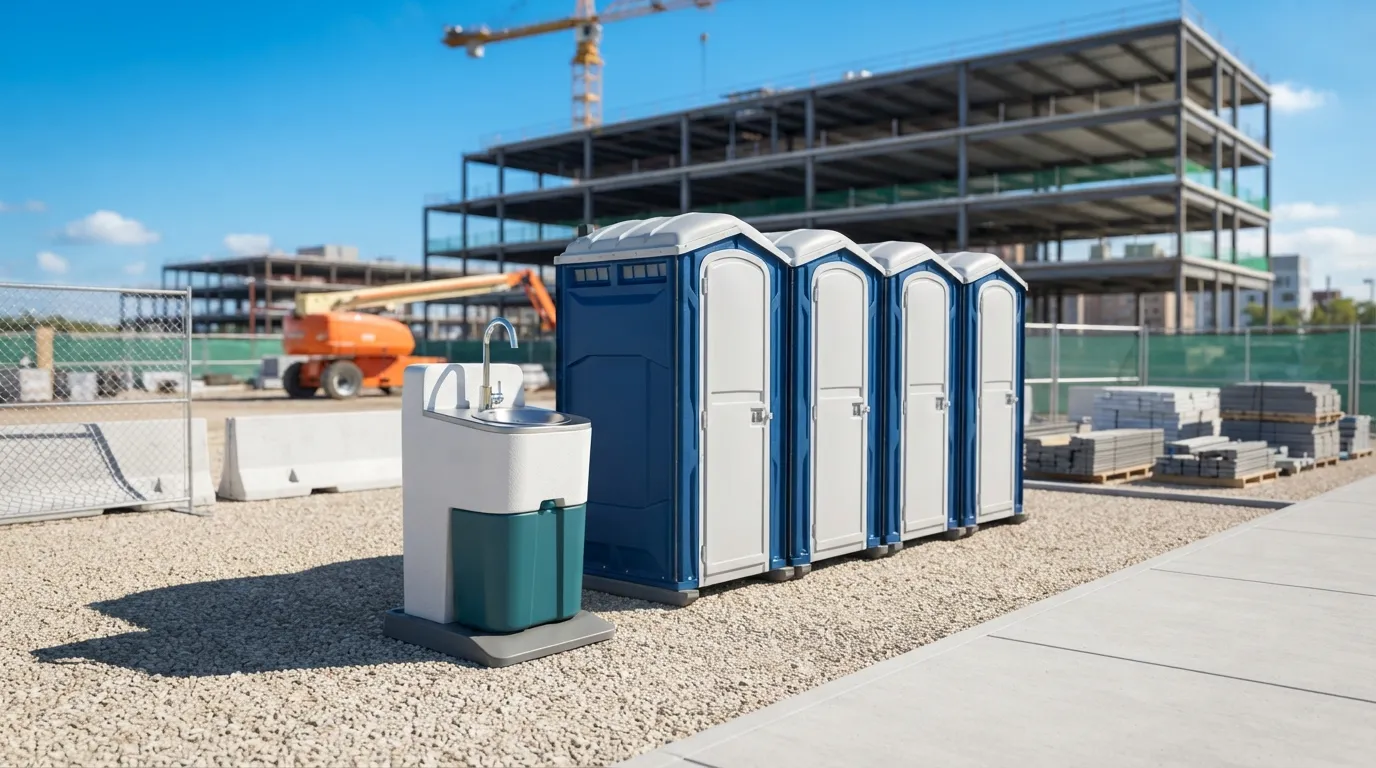
A shelter housing displaced residents needs toilets, water and a place to wash hands, fast. Fort Collins Porta Pros treats this as a standing-by service, not a special order, because emergencies do not wait for a normal delivery window. Standard porta potty rental covers the baseline: a 60 to 70 gallon holding tank per unit, about 44 by 48 inches on the ground, 92 inches tall. For a Red Cross shelter or county emergency operations site, OSHA 1926.51(c) sets the ratio that guides our count: one toilet for 20 workers or fewer, then one toilet and one urinal per 40 up to 200. We apply that same math to displaced-population estimates when a formal ratio is not handed to us. Water matters as much as toilets. OSHA 1926.51(a)(1) requires an adequate supply of potable water at any staffed site, and a handwashing station rental or portable sink rental fills that gap where plumbing is down. Soap and towels are not optional extras: 29 CFR 1910.141(d)(2) calls for both, and hand sanitizer alone does not satisfy it. If flooding has knocked out a septic system entirely, a holding tank rental or emergency septic service can bridge the gap until the ground dries out enough for septic pumping service to resume.
How fast can units reach a Fort Collins disaster site?
Fort Collins Porta Pros keeps stock local, which is what makes a same-day or next-day drop possible. Emergency porta potty rental is built around that promise: a phone call, a site description, units on a truck. Loveland sits 10.6 miles south, Timnath 8.4 miles east, and Laporte 10.4 miles northwest, so a mutual-aid staging area in any of those towns is within a short run of our yard. Windsor is 12.6 miles southeast, Wellington 14.7 miles north. Distance shapes how many units we stage where, and during a widescale event we split inventory across sites rather than run one long loop. A roll-off delivery still needs about 60 feet of straight clearance behind the truck, and that does not change just because the situation is urgent; a blocked alley or a downed line means a slower delivery no matter how many units are queued. If debris removal is part of the response, a roll-off dumpster rental or construction dumpster rental gets scheduled alongside the restrooms so cleanup crews are not waiting on two different vendors. Fencing off a hazard zone or securing a staging perimeter is common too, and temporary fence rental or a crowd control barrier rental can go up the same visit as the toilets. For a longer relief operation, a storage container rental rental or mobile office trailer rental gives responders a dry place to stage supplies and paperwork.
Do disaster relief sites need accessible units?
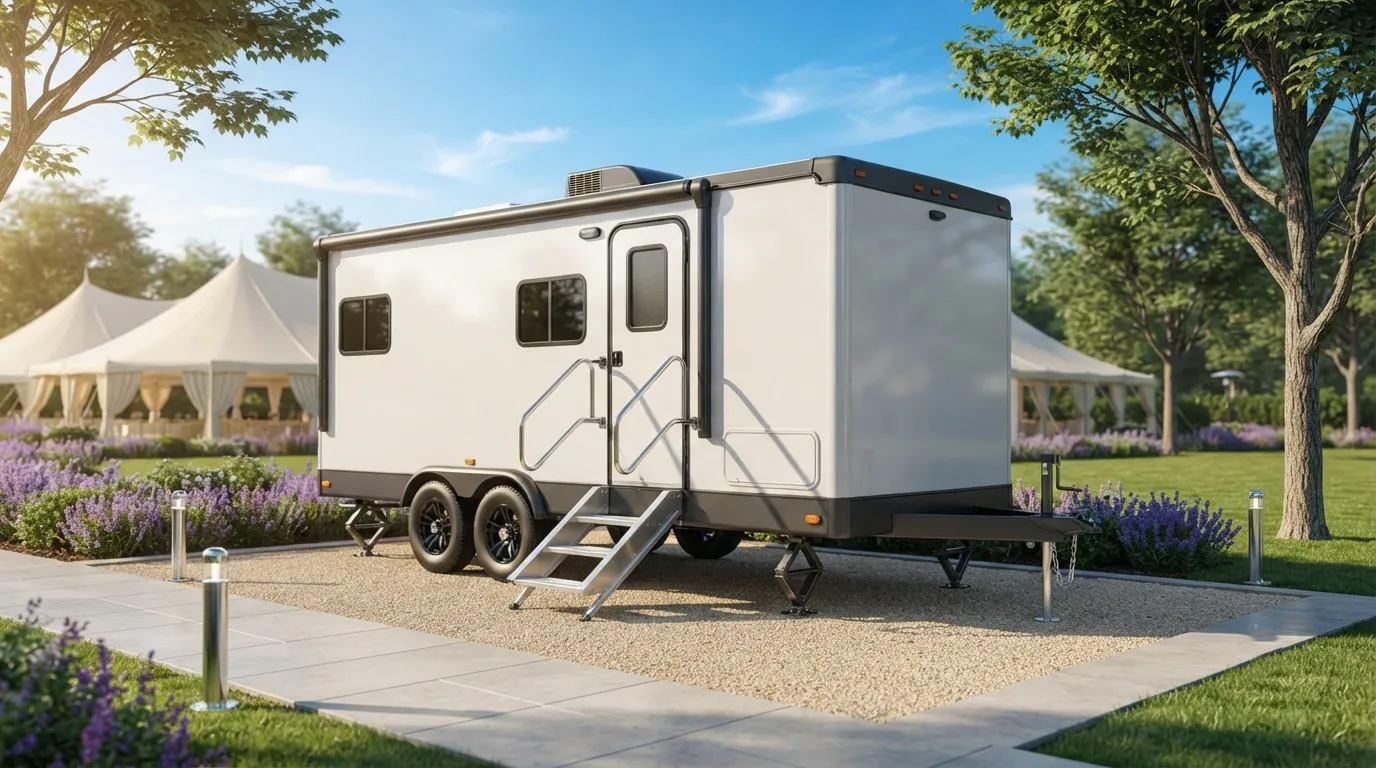
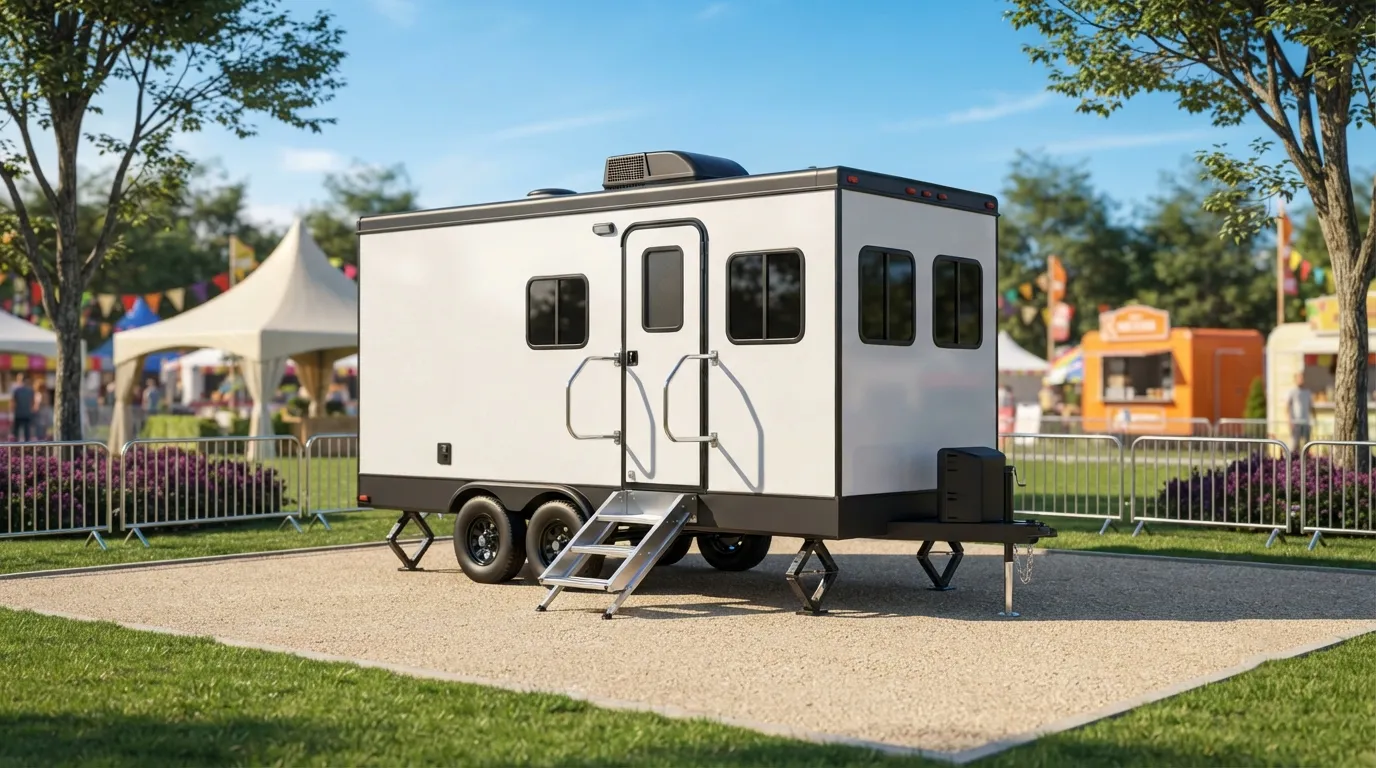
Yes. ADA Standards section 213.2 requires that where single-user portable units are clustered, at least 5 percent be accessible, and never fewer than one. A shelter serving the general public is exactly that kind of cluster, so an ADA accessible porta potty belongs in the order from the start, not as an afterthought once someone asks. The accessible unit needs a 60 inch turning circle under ADA 304.3.1 and a 32 inch clear door opening under ADA 404.2.3, and the ground around it should be stable and firm per ADA 302.1, which matters on wet or muddy disaster ground more than almost anywhere else. If the response includes a larger command post or a multi-day encampment for crews, a restroom trailer rental or 2 stall restroom trailer gives more privacy and climate control than a standard unit, and a shower trailer rental is worth adding once displacement stretches past a few days. Lighting and power tend to become sanitation problems after dark, since a unit nobody can find or safely reach is a unit nobody uses; a light tower rental or temporary power pole pairs naturally with restroom placement in a blacked-out area. Every one of these pieces, from porta john rental counts to fencing, ties back into construction site services planning, which is the same logistics playbook we use for any large temporary population in Fort Collins.
Frequently Asked Questions
How many toilets does a shelter of 200 people need?
OSHA 1926.51(c) calls for one toilet and one urinal per 50 people once a site reaches 200 or more workers, and we use that ratio as a floor for shelter populations too. Actual counts depend on line lengths and hours of operation; see how many porta potties do I need for a fuller breakdown.
Can Fort Collins Porta Pros deliver during a declared emergency?
Yes, and it is the core of what emergency porta potty rental exists for. We prioritize shelters, medical staging and utility crews first, then fill remaining capacity. Call ahead with a unit count estimate so we can route trucks efficiently.
What if the site has no power or water at all?
Standard units need neither; the 60 to 70 gallon tank is fully self-contained. Pair them with a handwashing station rental for soap and water access, since 29 CFR 1910.141(d)(2) requires both, and sanitizer alone will not cover it.
Do you provide holding tanks if septic systems are flooded?
Yes. A holding tank rental can serve a building whose septic system is compromised, buying time until the ground stabilizes enough for normal septic tank pumping cost service to resume safely on-site.
How is pricing handled for emergency response contracts?
Standard units run $100 to $350 a day depending on volume, duration and delivery distance; see porta potty rental cost for the fuller breakdown. Multi-week deployments typically shift to weekly or monthly rates, which we quote once scope is known.
Next step
Get a delivery date
Tell us the address, the dates and the headcount. We size the order and confirm the route.